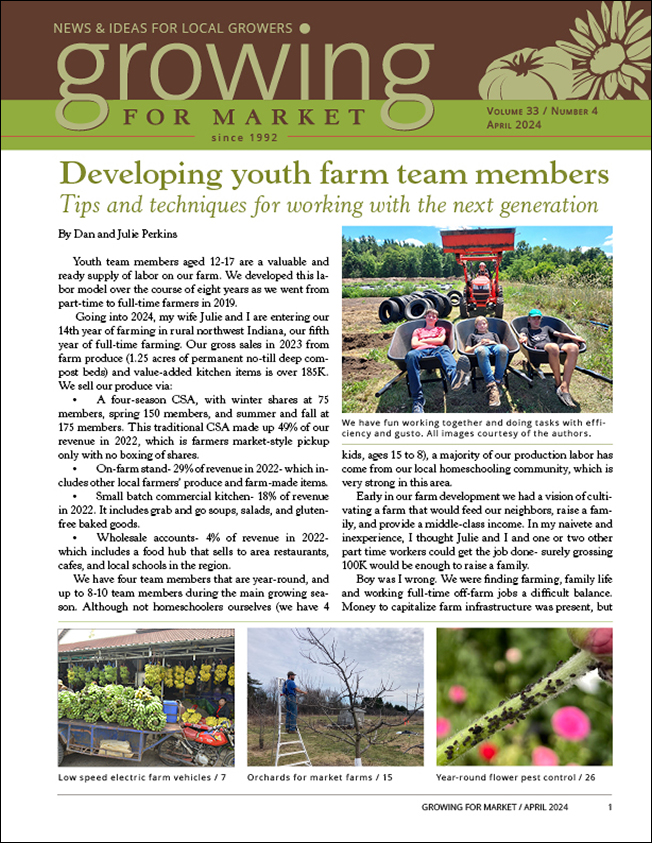
In the April magazine
• Year-round flower farm pest management
• Low speed electric vehicles on the farm
• Small-scale orcharding on your veg or flower farm
• Assawaga Farm profile
• Developing youth farm team members
and more!

Subscription Options
Get 10 issues/year - subscriptions automatically renew. Opt-out of auto-renew anytime.
All Subscriptions - Get 20% Discount Off All Books
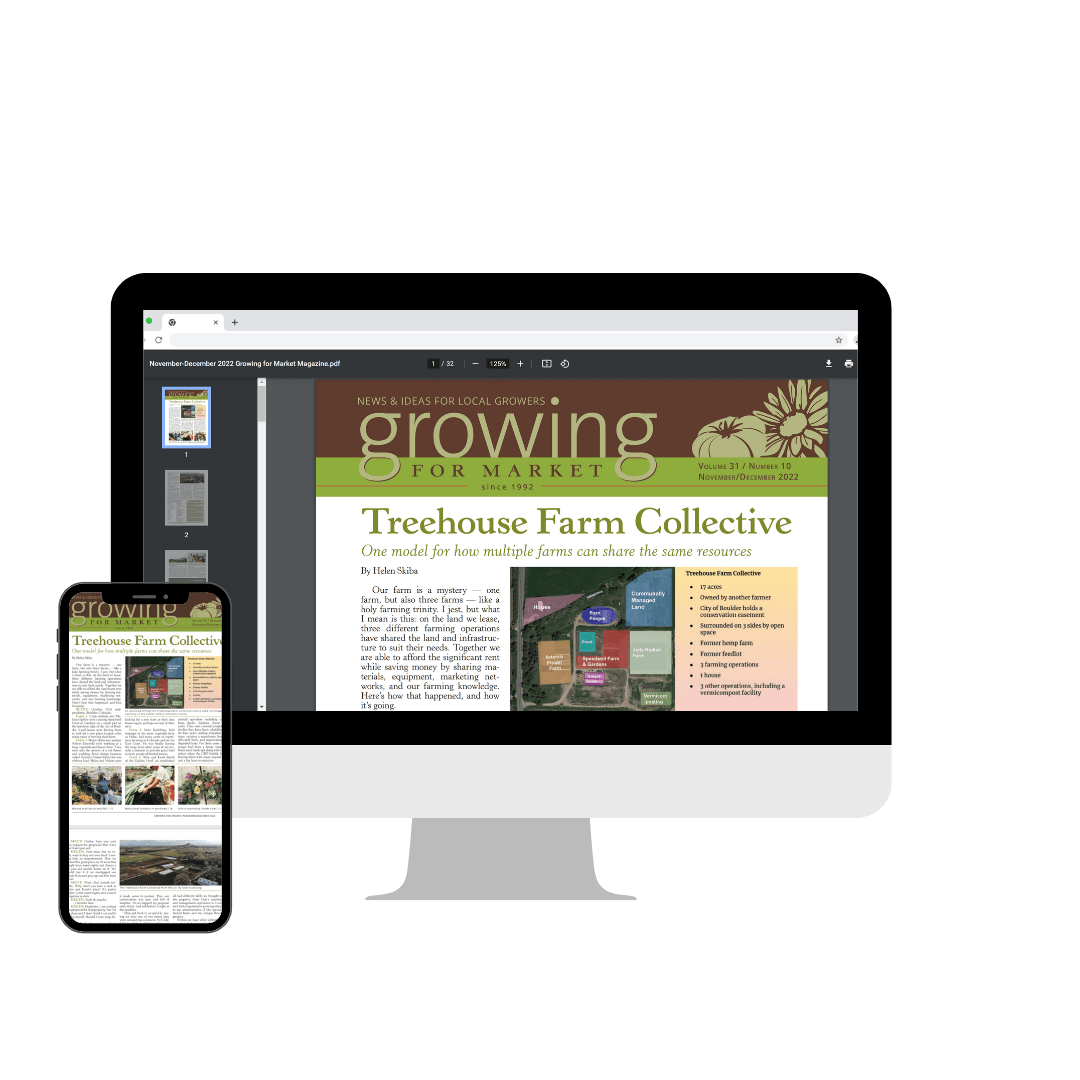
Digital Issue
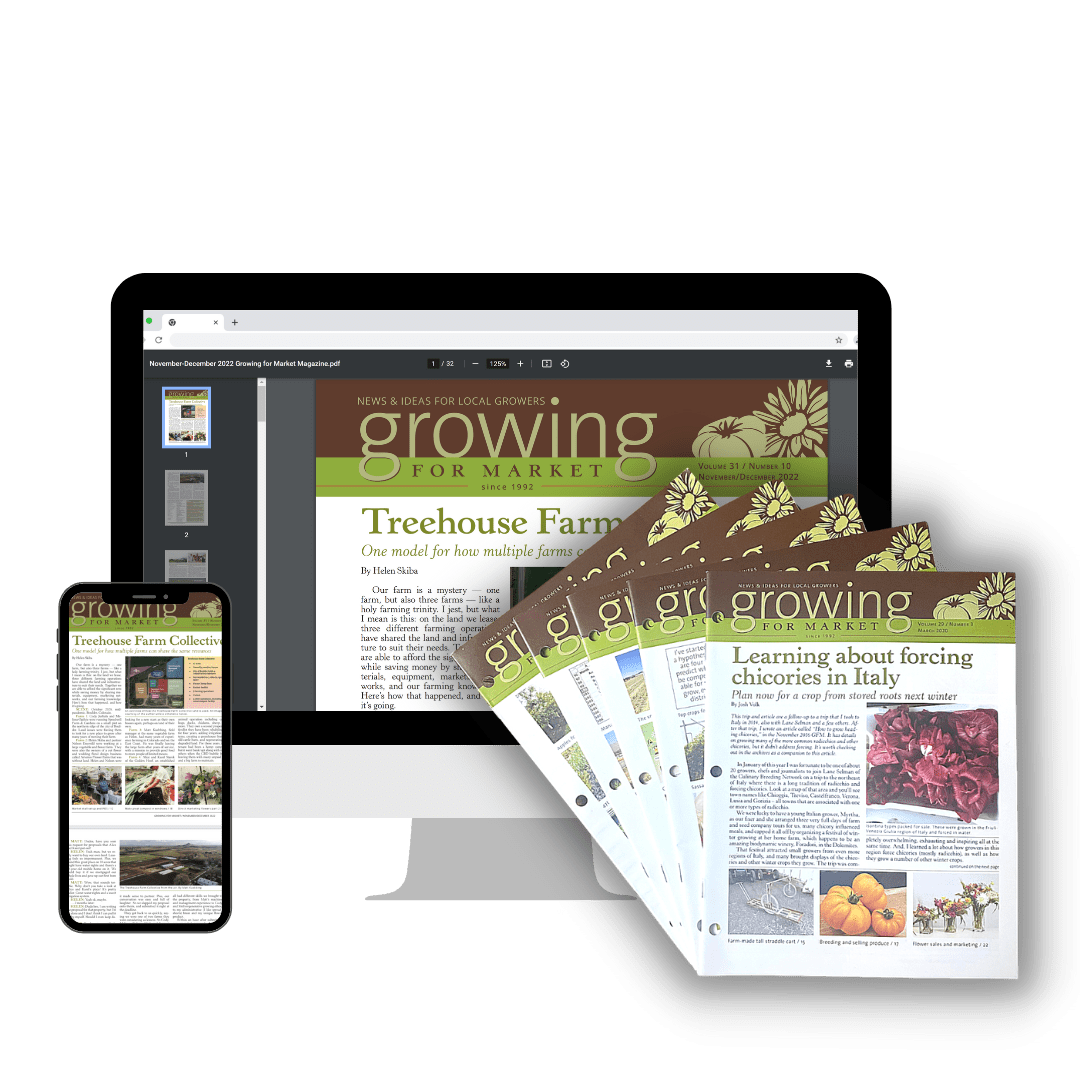
Print Issue - to USA

Full Access

Full Access Plus

.jpg?alt=media&token=2df774a9-354c-4774-bb7f-cbfa406f66d4)

Our Bookstore for Market Gardener's
A comprehensive bookstore for the sustainable market farm. GFM subscribers get 20% off all books! Shop our apparel and back issues, too.
Our Magazine Started On A Family Farm In Kansas Over 30 Years Ago
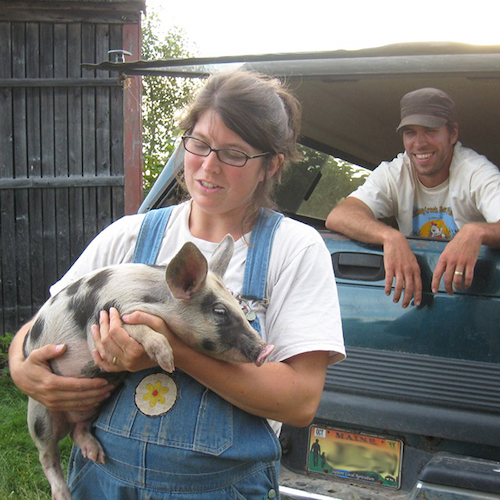
Founded by “The Flower Farmer” author Lynn B. today the magazine is still independently owned and operated by farmers Ann & Andrew Mefferd from their farm in Maine, USA since 2016.
Free articles
Frequently Asked Questions
Who is this magazine for?
Growing For Market magazine is for Farmers who grow vegetables & flowers for local markets like farmers markets, CSA’s, & regional wholesaling. Also for aspiring farmers & serious home gardeners.
What does the magazine cover?
Growing For Market magazine covers growing, marketing, & business best practicies for direct market farms. We make sure every issue has helpful veggie & flower production tips & advice that comes from experienced farmers.
Do magazine subscriptions automatically renew?
Yes, after your initial 1 year subscription, your subscription to Growing For Market Magazine will automatically renew for another year unless you choose to opt-out. If you do nothing, your subscription will continue until you tell us to stop. Your credit card or payment method used at the time of purchase will be charged again at the start of your new term. Cancel at any time, just log into your member account & opt-out of automatic renewal or contact customer service online or by phone: 1-800-307-8949 (Toll Free US & Canada).
Can I opt-out of automatic renewal?
Yes, you can cancel automatic renewal of your magazine subscription at any time, just log into your member account & opt-out of automatic renewal or contact customer service online or by phone: 1-800-307-8949 (Toll Free US & Canada).
Why is a FULL ACCESS subscription better?
When you purchase a FULL ACCESS or FULL ACCESS PLUS subscription you get access to a treasure trove of over 1,600 past GFM articles. Best of all you can search through these article by keywords. For Example: If you need expert info on how to treat “powdery mildew on flowers” ASAP you just use our search bar to find articles immediately on the topic! Watch this video to learn more.
What is your return policy?
100% Satisfaction Guarantee! If at any point you’re not 100% satisfied with your subscription let us know by contacting customer service online ([email protected]) and we will immediately prorate your subscription.
Who has written for Growing For Market Magazine?
J.M. Fortier, Eliot Coleman, Erin Benzakein, Lynn Byczynski, Conor Crickmore, Jessie Frost, Gretel Adams, Josh Volk, & many other top flower and market gardening leaders. Keep in mind you can read any of their past articles today when you sign up for a FULL ACCESS magazine subscription.
Can I write for GFM Magazine?
We love when farmers submit article proposals to Growing For Market magazine! If interested, view our writer guidelines.
Can you mail print issues outside of the USA?
Yes, we ship our print issue to Canada. If interested, be sure to select the correct print issue subscription package for Canada Click to learn more.
Unfortunately, we do not ship print issues to countries other than the US & Canada due to the high costs of shipping but you are still welcome to subscribe to our "Digital" or "Full Access" subscriptions from anywhere in the world.
 |
Our 100% Risk-Free Guarantee!We are so sure you’ll love it that if at any time you’re not 100% satisfied we will immediately prorate your magazine subscription! No questions asked. |
Our Magazine Sponsors




_2.jpg "veggie cropper")